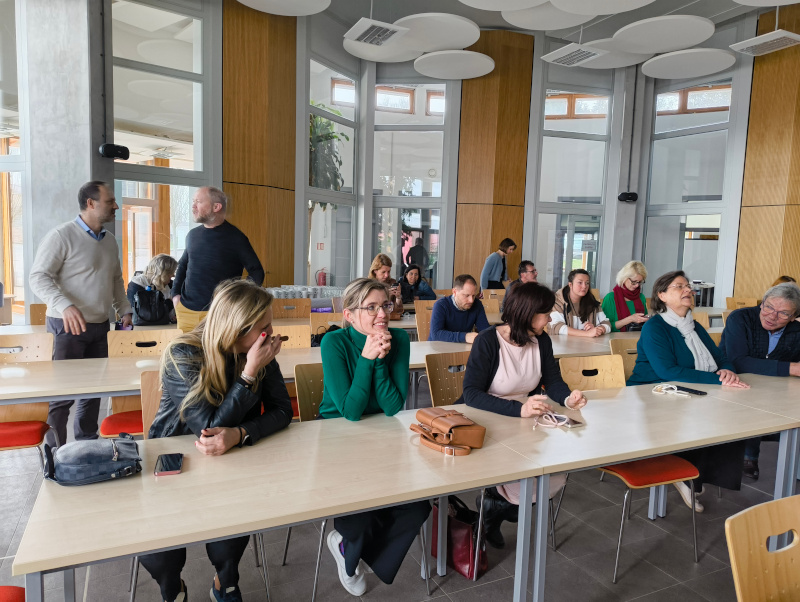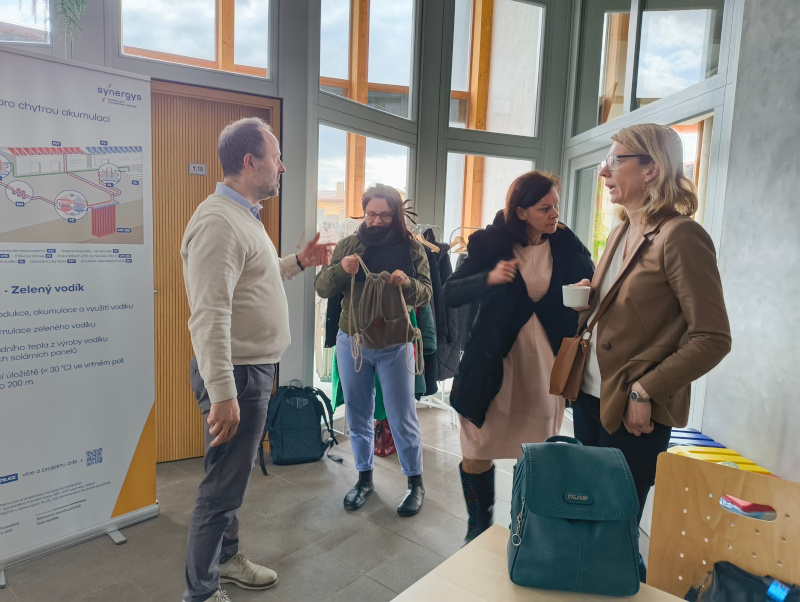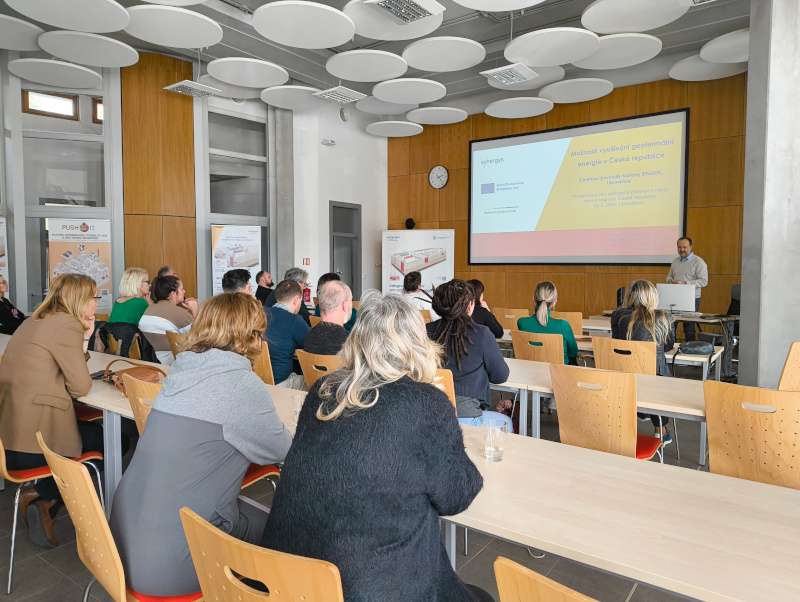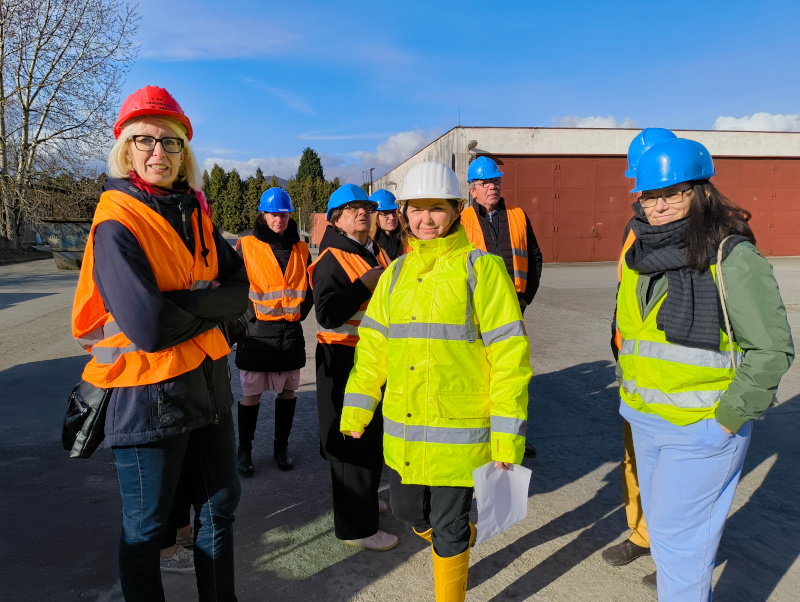

This year’s event included a field trip for approximately 20 representatives of Czech municipalities to the RINGEN research center, which provided insight into innovative projects that could significantly impact the energy self-sufficiency and sustainable development of Czech cities. The program began with a technical presentation by center manager Antonín Tym on the potential of geothermal energy. Participants gained detailed insight into the European projects PUSH-IT and SYNERGYS, which focus, among other things, on seasonal underground thermal energy storage. Borehole thermal energy storage (BTES) is also the first technology being implemented as part of the SYNERGYS project, so visitors had the opportunity to see the drilling rig in action.
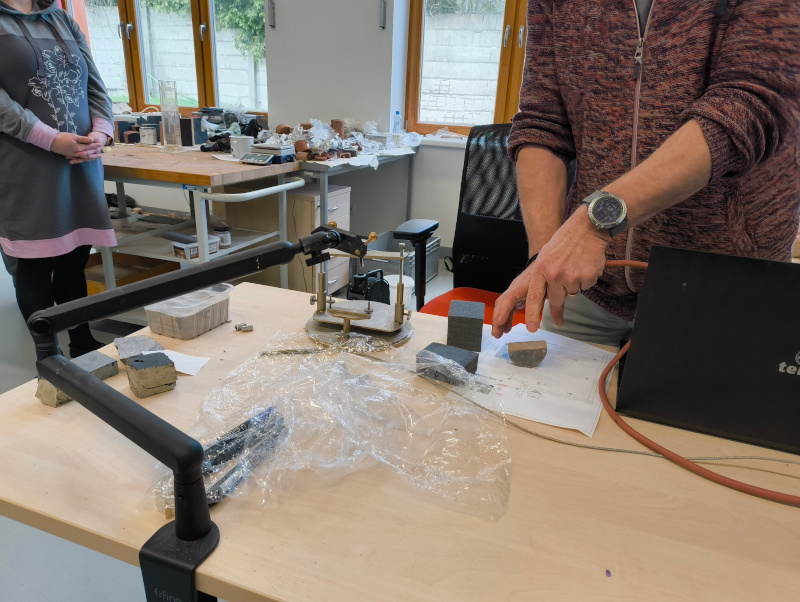
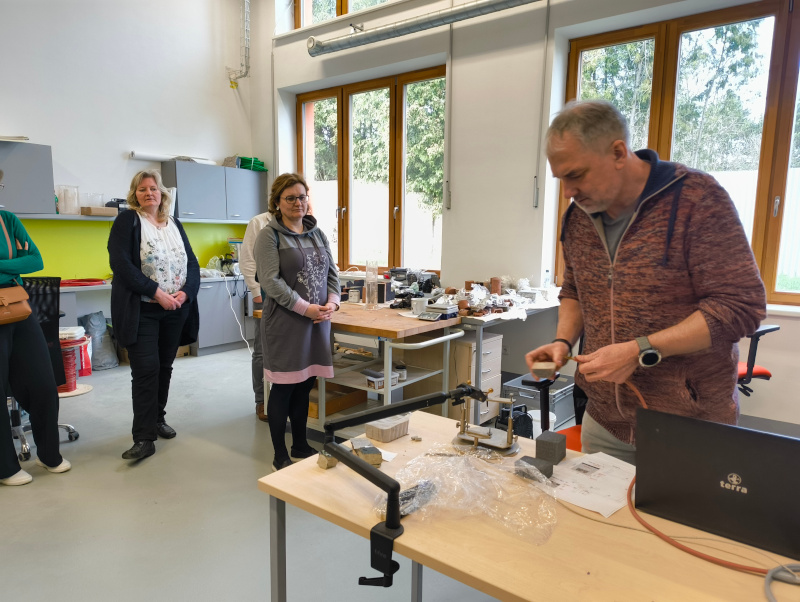
Geothermal technology and other renewable sources are key to transforming cities into “healthy” and sustainable settlements, which is the main vision of the NSZM network. During the excursion, guests toured the geothermal laboratory with its modern instrumentation, where scientists from the Institute of Geophysics of the Academy of Sciences measure the thermal properties of rocks. Visitors were fascinated by the drill cores, which provide valuable data on the composition of the Earth’s crust, as well as the system of seismic monitoring stations.
For many, the center’s cutting-edge technological advancements came as a big surprise. One participant did not hide his admiration for how the vision of energy independence is becoming a reality: “I was here years ago, and now I’m surprised by how much the research center has progressed. It’s clear that the project is in good hands. I had no idea that so many boreholes were being drilled here. I was particularly excited by the information that excess energy will be stored underground over the summer and used on-site to heat the RINGEN building.”
While the tour focused on the technical aspects of sustainability, the main program at Litoměřice Castle and the Cultural and Creative Center addressed the social and community dimensions of a “healthy” city. The main points of the program focused on the relationship between cities and their young residents. A panel discussion featuring representatives from the Ministry of Education, Youth and Sports, the Czech Council of Children and Youth, and the Czech High School Union raised the question of involving the next generation in municipal governance. Examples of best practices from Mikulov, Chrudim, and Prague 10 demonstrated how the planning for safe mobility and inspiring urban spaces should look like. The Participation Fair demonstrated how to effectively connect city halls with citizens, non-profit organizations, and entrepreneurs.
Hosting the Spring School at the RINGEN research center highlights Litoměřice as a leader in sustainable development. The Healthy City project is not just about social services, but about a comprehensive approach to citizens’ lives, in which a clean environment and modern public administration play a key role.