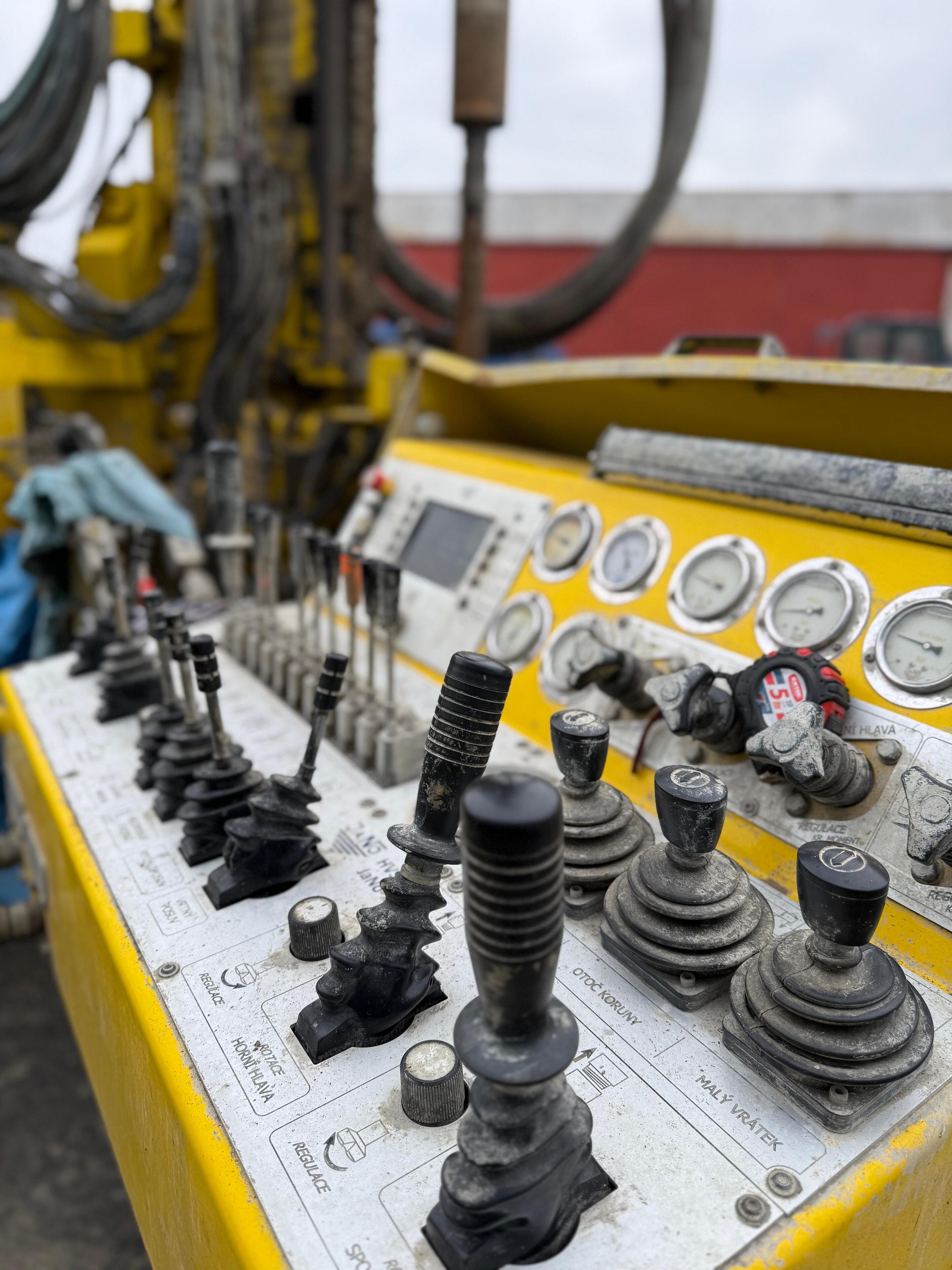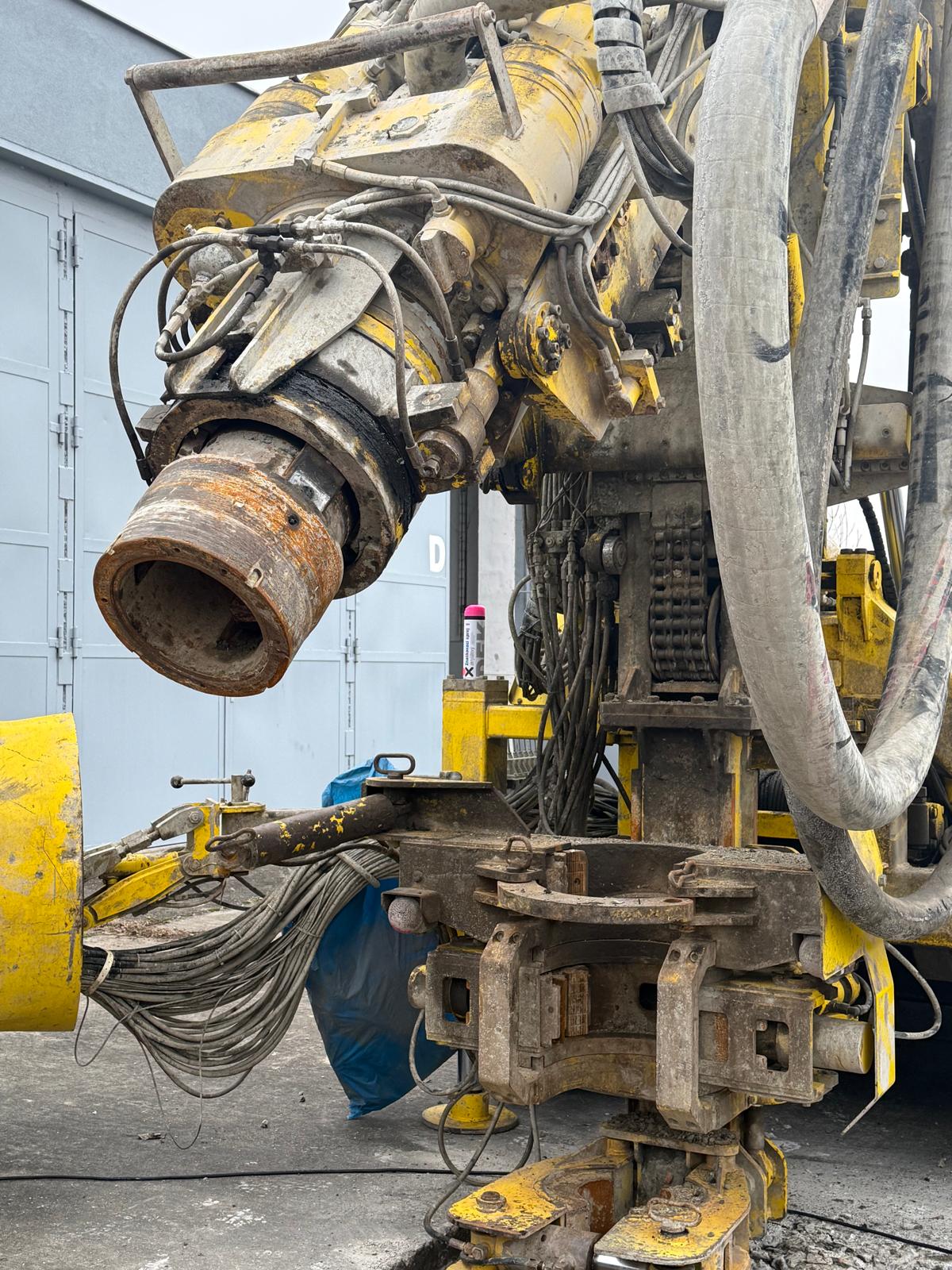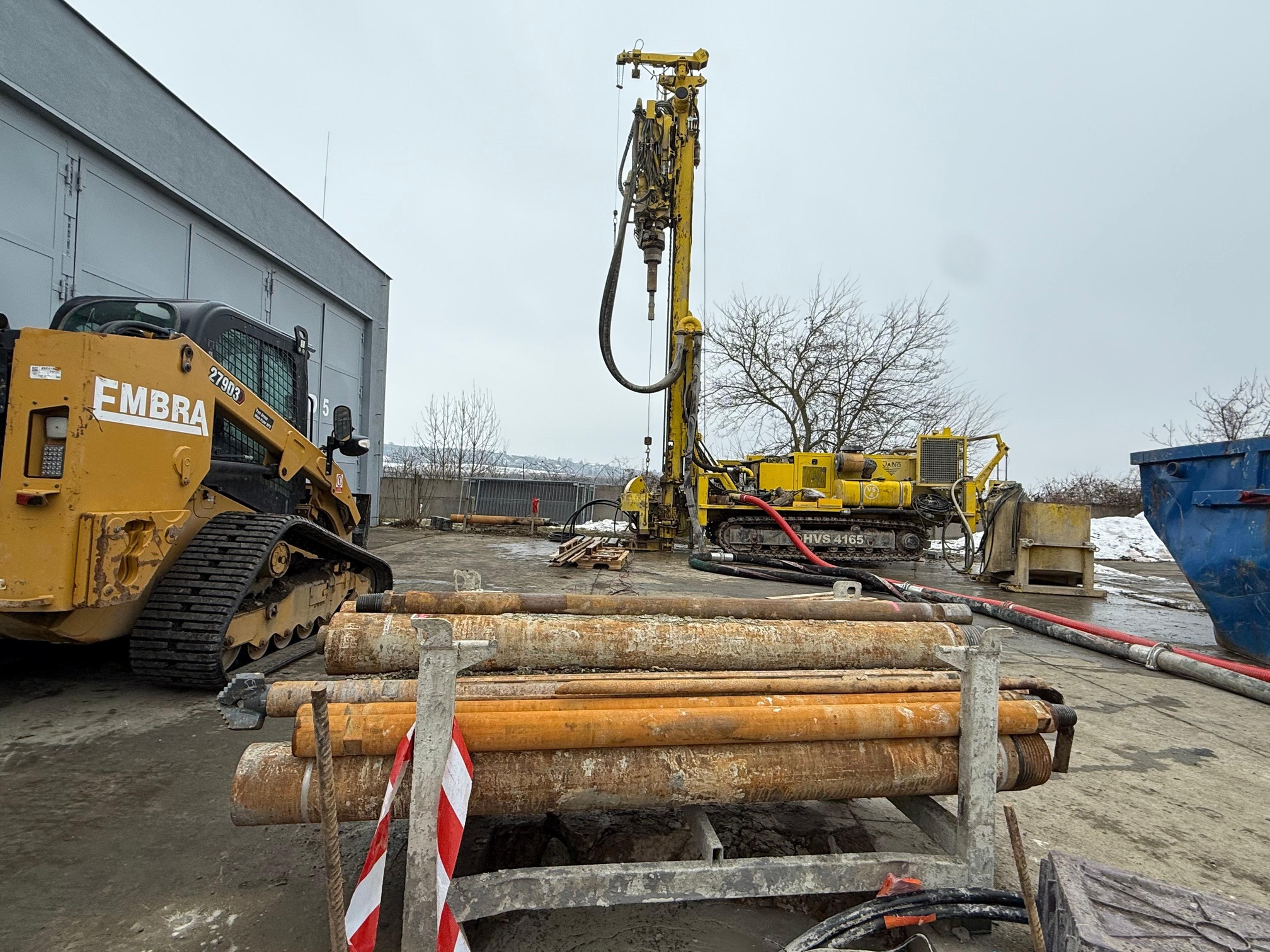

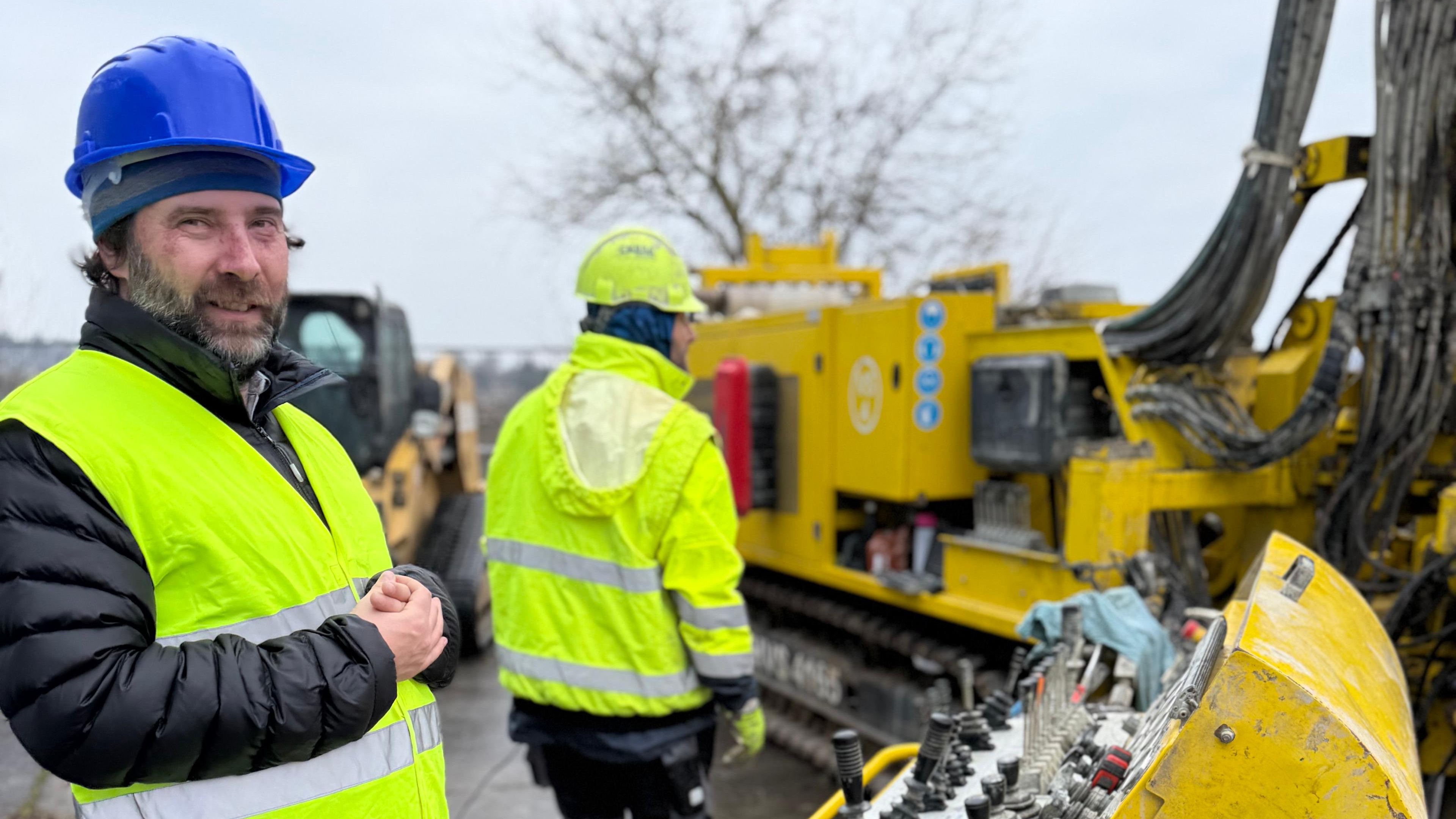
Construction of the smallest of the planned borehole fields is currently in full swing. “At the moment, we are completing the second of a total of four production boreholes. In the immediate vicinity of one of them, we will also construct three monitoring boreholes to measure the rate at which heat propagates up to three metres from the heated borehole,” said Vít Peřestý of the Czech Geological Survey, who is overseeing the drilling operations in Litoměřice.
However, monitoring will not be limited to this test site alone. In the vicinity of the planned BTES2 and BTES3 borehole fields, several pairs of monitoring hydrogeological boreholes at depths of 100 and 200 metres will also be constructed in a triangular configuration. Drilling of the first of these is expected to begin as early as next week. “A triangular configuration is ideal for accurately determining the direction of groundwater flow. If groundwater flows too quickly, it leads to heat losses and thus reduces storage efficiency. The design of the fields therefore needs to be adapted to the direction and speed of flow. The fields will not be centrally symmetrical; instead, they will be elongated in the direction of flow so that carried-away heat can be captured in a neighbouring borehole. At the same time, the hydrogeological boreholes will enable long-term monitoring of groundwater quality, providing evidence that heat storage does not affect groundwater,” Peřestý added.
Geological conditions at the drilling site are relatively well defined. Down to roughly the first 30 metres, the subsurface consists of sands, gravels and clays associated with sedimentation in the vicinity of the River Elbe, dating back at most hundreds of thousands of years. Deeper layers include marlstones and sandstones approximately 100 million years old from the Late Cretaceous period. The groundwater table lies at around 25 metres below ground level, corresponding to the level of the nearby River Elbe.
According to the scientists, the borehole fields will not affect groundwater levels or the groundwater regime on surrounding properties, as no water will be pumped from the boreholes as part of the system. Only negligible temperature changes are expected in the immediate vicinity of the boreholes (the first few metres).
Drilling works are scheduled to be completed in spring. The boreholes will then be connected to the surface technologies already installed in the RINGEN building, and testing of this innovative system will begin.